
Thailand Retirement Visa Requirements: Everything Retirees Need to Know
Thailand Retirement Visa Requirements 2026 Complete Guide is essential reading for foreigners planning to retire in Thailand and enjoy a comfortable long-term stay. Thailand continues to attract retirees from around the world thanks to its affordable cost of living, high-quality healthcare services, warm climate, beautiful destinations, and welcoming culture. Before relocating, it is important to understand the latest visa requirements, financial obligations, and immigration regulations to ensure a smooth and successful retirement journey.
Thailand has become one of the most popular destinations for retirees from around the world. With its affordable cost of living, excellent healthcare system, warm climate, beautiful beaches, and welcoming culture, many foreigners choose Thailand as their long-term retirement home. If you are considering a retirement plan in Thailand, understanding the visa requirements and legal obligations is essential before making the move.
This guide covers everything you need to know about Thailand retirement visa eligibility, financial requirements, application procedures, renewal rules, and important regulations that every retiree should understand.
สารบัญ
- Why Thailand Retirement Is Popular Among Foreigners
- Understanding the Thailand Retirement Visa
- Non-Immigrant O Visa
- Non-Immigrant O-A Visa
- Non-Immigrant O-X Visa
- Thailand Retirement Visa Requirements
- Age Requirement
- Financial Requirements for Thailand Retirement
- Option 1: Bank Deposit Method
- Option 2: Monthly Income Method
- Option 3: Combination Method
- Documents Required for Thailand Retirement Visa Applications
- Personal Documents
- Financial Documents
- Additional Documents
- Health Insurance for Thailand Retirement
- How to Apply for a Thailand Retirement Visa
- Step 1: Determine Eligibility
- Step 2: Prepare Documentation
- Step 3: Submit the Application
- Step 4: Wait for Approval
- Step 5: Enter Thailand
- Annual Extension for Thailand Retirement
- 90-Day Reporting Requirement
- Can You Work During Thailand Retirement?
- Best Places for Thailand Retirement
- Chiang Mai
- Hua Hin
- Phuket
- Bangkok
- Cost of Living for Thailand Retirement
- Accommodation
- Food
- Transportation
- Healthcare
- Common Thailand Retirement Visa Mistakes
- Incomplete Documentation
- Incorrect Financial Evidence
- Late Renewals
- Ignoring Reporting Obligations
- Poor Financial Planning
- Tips for Successful Thailand Retirement
- Frequently Asked Questions About Thailand Retirement
- What is the minimum age for Thailand retirement?
- How much money is required for Thailand retirement?
- Can I bring my spouse during Thailand retirement?
- Is healthcare good for Thailand retirement?
- Can I renew my retirement visa every year?
Why Thailand Retirement Is Popular Among Foreigners
The popularity of Thailand retirement continues to grow year after year. Retirees are attracted by a combination of lifestyle benefits and financial advantages that are difficult to find elsewhere.
Some of the main reasons people choose Thailand retirement include:
Affordable housing and living expenses
High-quality healthcare services
Modern infrastructure
Warm tropical weather
Friendly local communities
Excellent transportation networks
Diverse lifestyle options from beaches to mountains
Whether you prefer the peaceful atmosphere of Chiang Mai, the seaside lifestyle of Hua Hin, or the vibrant energy of Bangkok, retiring in Thailand offers options for every lifestyle and budget.
Understanding the Thailand Retirement Visa
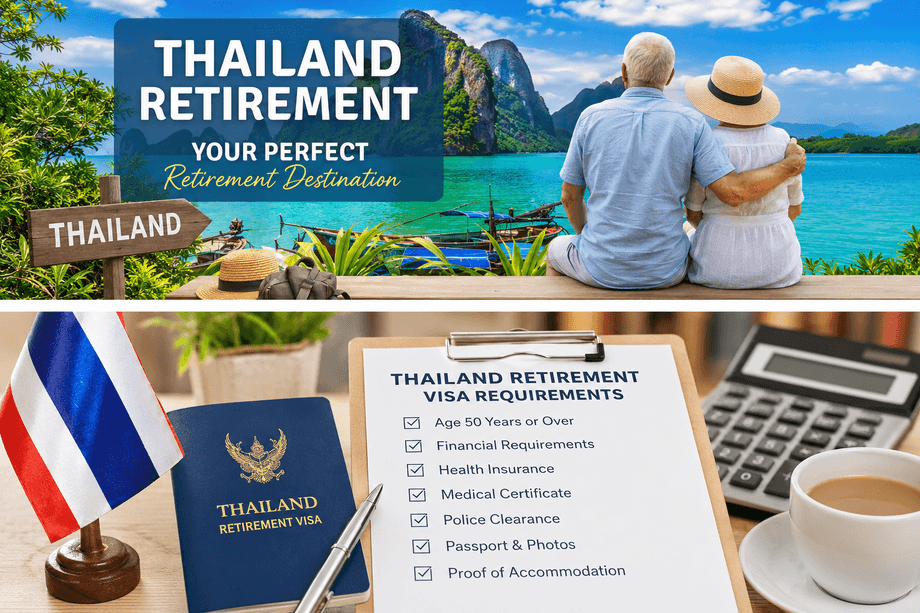
A Thailand retirement visa is designed specifically for foreigners aged 50 years and older who wish to live in Thailand on a long-term basis.
The most common visa options for retirement in Thailand include:
Non-Immigrant O Visa
The Non-Immigrant O Visa is one of the most common choices for retirement. Many retirees enter Thailand with this visa and later apply for annual retirement extensions.
Non-Immigrant O-A Visa
The O-A Visa is often referred to as the Long-Stay Retirement Visa. It is available to eligible applicants who apply from their home country before entering Thailand.
Non-Immigrant O-X Visa
The O-X Visa offers a longer validity period and is available to citizens from selected countries who meet specific financial requirements.
For most retirees, the Non-Immigrant O or O-A Visa provides the most practical path for long-term retirement in Thailand.
Thailand Retirement Visa Requirements

Understanding Thailand retirement visa requirements is crucial before starting the application process.
Age Requirement
The first and most important Thailand retirement requirement is age.
Applicants must:
Be at least 50 years old
Hold a valid passport
Meet financial requirements
Have no prohibited immigration status
Without meeting the minimum age requirement, applicants cannot qualify for a Thailand retirement visa.
Financial Requirements for Thailand Retirement
Financial stability is one of the most important aspects of Thailand retirement visa approval.
The Thai government requires retirees to demonstrate sufficient financial resources to support themselves during their stay.
Option 1: Bank Deposit Method
Applicants may qualify for Thailand retirement by maintaining:
800,000 THB in a Thai bank account
The funds must be deposited according to immigration regulations and maintained for the required period.
This method is widely used by retirees planning a long-term retirement lifestyle in Thailand.
Option 2: Monthly Income Method
Applicants can also qualify for Thailand retirement by proving a monthly income of:
65,000 THB or more
Acceptable sources include:
Government pensions
Private pensions
Retirement income
Investment income
Many retirees prefer this method because it allows them to use regular retirement income rather than maintaining a large bank balance.
Option 3: Combination Method
Thailand retirement regulations also allow a combination of:
Annual income
Savings in Thailand
The combined total must meet immigration requirements.
Documents Required for Thailand Retirement Visa Applications
Preparing accurate documentation is essential for a successful Thailand retirement application.
Typical documents include:
Personal Documents
Valid passport
Passport photographs
Visa application form
Proof of residence
Personal information forms
Financial Documents
Thai bank statements
Bank certification letter
Pension statements
Income verification documents
Proof of transferred funds
Additional Documents
Depending on the visa category, Thailand retirement applicants may also need:
Medical certificate
Police clearance certificate
Health insurance documents
Supporting financial evidence
Preparing complete documentation can significantly improve the success rate of a retirement visa application.
Health Insurance for Thailand Retirement
Healthcare is one of the major reasons foreigners choose Thailand retirement.
Thailand offers internationally recognized hospitals, experienced medical professionals, and affordable treatment costs.
While health insurance requirements may vary depending on visa type and immigration policies, obtaining comprehensive medical coverage is highly recommended for all retirement visa applicants.
Benefits of health insurance include:
Hospitalization coverage
Emergency medical treatment
Specialist consultations
Prescription medication coverage
International medical support
Having proper insurance helps retirees enjoy life in Thailand with greater peace of mind.
How to Apply for a Thailand Retirement Visa
The Thailand retirement visa application process can be straightforward when properly prepared.
Step 1: Determine Eligibility
Confirm that you meet all Thailand retirement requirements regarding age and finances.
Step 2: Prepare Documentation
Gather all required documents and ensure they are current and accurate.
Step 3: Submit the Application
Applications may be submitted through:
Thai embassies
Thai consulates
E-Visa systems where available
Immigration offices within Thailand
Step 4: Wait for Approval
Processing times vary depending on location and visa category.
Step 5: Enter Thailand
Once approved, applicants can begin their retirement journey legally.
Annual Extension for Thailand Retirement
Most retirees choose to extend their stay annually.
To maintain Thailand retirement status, applicants must continue meeting immigration requirements each year.
Annual extensions generally require:
Updated financial evidence
Current passport
Application forms
Immigration fees
Residence verification
Maintaining proper records makes retirement visa renewals much easier.
90-Day Reporting Requirement
An important aspect of Thailand retirement is compliance with immigration reporting rules.
Retirees staying long-term in Thailand must report their address every 90 days.
Reporting can often be completed:
Online
Through an immigration office
Through authorized representatives
Failure to complete 90-day reporting may result in penalties and immigration complications.
Can You Work During Thailand Retirement?
A Thailand retirement visa does not allow employment.
Retirees cannot:
Accept paid employment
Operate a business without authorization
Work for a Thai company
Those wishing to work must obtain the appropriate visa and work permit.
For most people, Thailand retirement is intended purely for leisure, travel, and enjoying life after leaving the workforce.
Best Places for Thailand Retirement
One reason Thailand retirement remains popular is the wide range of lifestyle options available.
Chiang Mai
Chiang Mai is a favorite Thailand retirement destination due to:
Lower living costs
Cooler climate
Strong expat community
Excellent healthcare
Hua Hin
Hua Hin offers:
Beachfront living
Relaxed atmosphere
Golf courses
Modern amenities
Phuket
Phuket provides:
International lifestyle
Beautiful beaches
Luxury housing
Strong healthcare services
Bangkok
Bangkok is ideal for retirees seeking:
Urban convenience
World-class hospitals
Public transportation
Entertainment options
Each location offers unique advantages for retirees.
Cost of Living for Thailand Retirement
One of the biggest advantages of Thailand retirement is affordability.
Monthly expenses vary depending on lifestyle and location.
Common expenses include:
Accommodation
Apartments
Condominiums
Houses
Food
Thailand offers affordable local dining and international restaurants.
Transportation
Retirees can use:
Public transportation
Ride-sharing services
Personal vehicles
Healthcare
Medical expenses are often lower than in many Western countries.
These factors make Thailand retirement attractive for individuals seeking a comfortable lifestyle on a reasonable budget.
Common Thailand Retirement Visa Mistakes
Many applicants encounter delays because of avoidable mistakes.
Incomplete Documentation
Missing documents are a common cause of delays.
Incorrect Financial Evidence
Financial records must comply with immigration standards.
Late Renewals
Waiting until the last minute can create unnecessary stress.
Ignoring Reporting Obligations
Failure to comply with 90-day reporting can lead to fines.
Poor Financial Planning
Maintaining sufficient funds is essential for successful retirement visa renewals.
Tips for Successful Thailand Retirement
To enjoy a smooth Thailand retirement experience:
Open a Thai bank account early
Maintain proper financial records
Keep copies of all visa documents
Purchase adequate health insurance
Monitor visa expiration dates
Stay informed about immigration updates
Consider professional visa assistance
These steps can help make retirement in Thailand easier and more enjoyable.
Frequently Asked Questions About Thailand Retirement
What is the minimum age for Thailand retirement?
Applicants must be at least 50 years old.
How much money is required for Thailand retirement?
Most retirees must demonstrate either 800,000 THB in a Thai bank account, 65,000 THB monthly income, or a combination of both.
Can I bring my spouse during Thailand retirement?
Additional visa options may be available for spouses and dependents.
Is healthcare good for Thailand retirement?
Yes. Thailand is widely recognized for excellent healthcare facilities and medical professionals.
Can I renew my retirement visa every year?
Yes. Thailand retirement visas can generally be renewed annually if requirements continue to be met.
Thailand retirement continues to attract retirees from around the world because of its affordability, quality healthcare, welcoming culture, and exceptional lifestyle opportunities. Understanding the legal requirements, financial obligations, and immigration procedures is the key to a successful transition.
Whether you dream of beachside living, mountain scenery, or city convenience, Thailand offers a wide variety of options to suit your needs. By preparing the correct documents, maintaining financial qualifications, and following immigration regulations, you can enjoy a comfortable and rewarding retirement experience for many years to come.
Related blog